
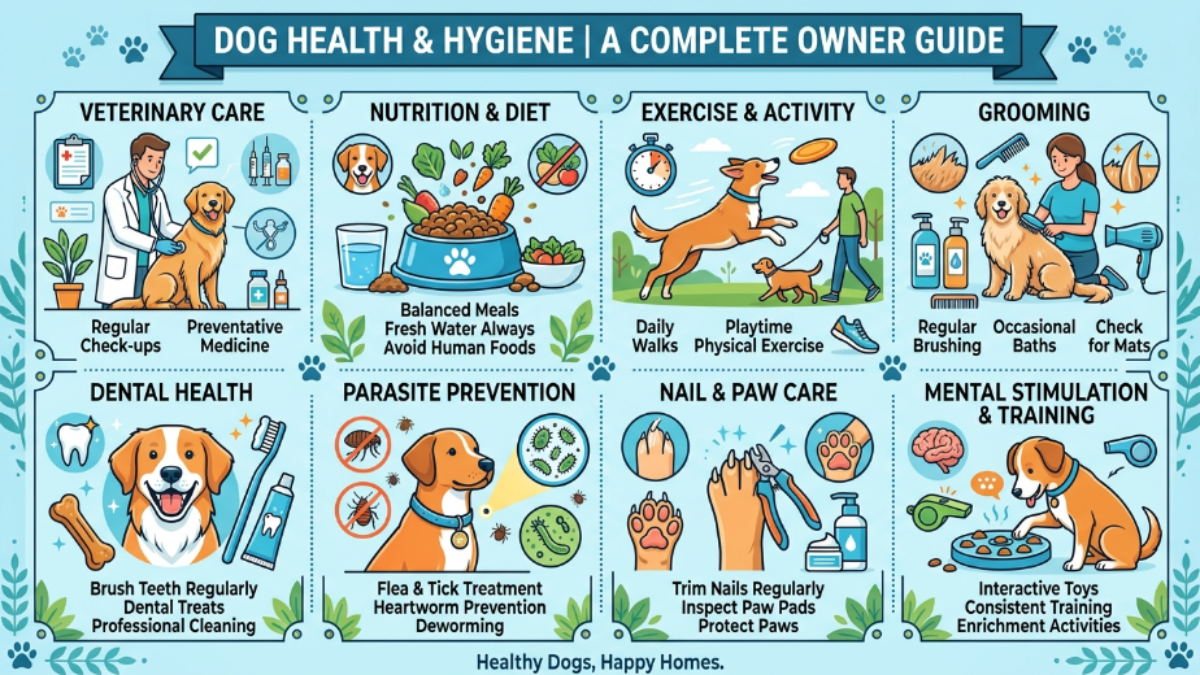
A healthy dog isn’t just one that eats well and exercises regularly it’s one whose hygiene is actively maintained through consistent daily, weekly and monthly routines. From preventing infections and parasites to catching early signs of illness, good health and hygiene practices are the single most powerful thing you can do to extend your dog’s life and improve its quality.
🩺Understanding Your Dog’s Overall Health
Good health starts with understanding what “normal” looks like for your specific dog. Every breed has different energy levels, typical weight ranges, coat conditions, and behavioral baselines. Knowing your dog’s normal means you’ll notice when something is off often before symptoms become serious.
Dogs are masters at hiding discomfort and pain, an instinct inherited from their wild ancestors who needed to appear strong to survive. This means that by the time a dog appears visibly unwell, a problem may have already been developing for days or weeks. Routine observation is your first line of defense.
Key Health Indicators to Monitor Daily
👁️
Eyes
Clear, bright, and free from discharge. Cloudiness or redness warrants attention.
👃
Nose
Moist and cool is normal. Persistent dryness or colored discharge may signal illness.
👂
Ears
Light pink inside, no odor or dark debris. Head-shaking often signals an ear infection.
🦷
Teeth & Gums
Gums should be pink and moist. Pale or white gums are a veterinary emergency.
🐾
Paws & Nails
No cracking, swelling, or limping. Check between toes for debris or growths.
🐩
Coat & Skin
Shiny, smooth coat with no bald patches, excessive shedding, or flaking skin.
💉Vaccinations & Preventive Care
Vaccinations are the cornerstone of preventive health. They protect your dog from a range of serious, often fatal diseases — many of which have no cure once contracted. Staying current on your dog’s vaccine schedule is one of the most straightforward and impactful things you can do as a responsible owner.
Core vs. Non-Core Vaccines
Core vaccines are recommended for all dogs regardless of lifestyle or location. Non-core vaccines are given based on geographic risk, lifestyle exposure, and your vet’s recommendation.
| Vaccine | Type | First Dose | Booster |
|---|---|---|---|
| Rabies | Core | 12–16 weeks | Every 1–3 years |
| Distemper / Parvovirus (DHPP) | Core | 6–8 weeks | Every 3 years |
| Adenovirus (Hepatitis) | Core | 6–8 weeks | Every 3 years |
| Bordetella (Kennel Cough) | Non-Core | 8 weeks | Annually |
| Leptospirosis | Non-Core | 12 weeks | Annually |
| Lyme Disease | Non-Core | 9 weeks | Annually |
| Canine Influenza | Non-Core | 6–8 weeks | Annually |
💡
Keep a Health RecordMaintain a physical or digital folder with your dog’s vaccine history, vet visit notes, medication records, and microchip number. This is invaluable during emergencies, boarding, or if you need to change vets.
🦟Parasite Prevention & Control
Parasites are one of the most common and most preventable health threats to dogs. They fall into two categories: external parasites (fleas, ticks, mites, lice) that live on the skin or coat, and internal parasites (roundworms, tapeworms, heartworm) that live inside the body. Both types can cause serious illness and are transmissible to humans in some cases.
Fleas & Ticks
Fleas reproduce at a staggering rate a single female can lay up to 50 eggs per day. They cause intense itching, skin allergies, and can transmit tapeworms. Ticks are carriers of Lyme disease, Rocky Mountain Spotted Fever, and other serious illnesses. Year-round prevention with vet-approved topical or oral treatments is far easier than treating an active infestation.
Heartworm A Silent Killer
Heartworm is transmitted through mosquito bites and, left untreated, is fatal. The parasite grows in the heart and lungs over months before symptoms appear. Monthly preventive medication is highly effective and inexpensive treatment for an active infection, by contrast, is long, costly, and hard on the dog. Have your dog tested annually and give preventive medication year-round.
🛡️ Parasite Prevention Checklist
- Monthly flea & tick preventive (topical or oral)
- Monthly heartworm preventive medication
- Annual fecal exam for intestinal worms
- Annual heartworm blood test
- Check coat for ticks after outdoor walks
- Wash bedding weekly in hot water
- Vacuum floors and furniture regularly
- Keep grass short in your yard
🦷Dental Health & Oral Hygiene
Dental disease is the most commonly diagnosed health condition in dogs yet it remains the most overlooked by owners. It begins with plaque, a soft film of bacteria that hardens into tartar within 72 hours if not removed. Over time, tartar buildup leads to gingivitis, tooth loss, and most seriously bacteria entering the bloodstream and damaging the heart, kidneys, and liver.
Daily Tooth Brushing
Brushing your dog’s teeth daily is the gold standard of dental care. Use a soft-bristled dog toothbrush and enzymatic dog toothpaste never human toothpaste, which contains fluoride and xylitol, both toxic to dogs. Introduce brushing gradually: start by letting your dog taste the toothpaste, then gently rub the teeth with your finger before introducing the brush.
Alternatives When Brushing Isn’t Possible
While nothing replaces brushing, these options can help reduce tartar buildup when used consistently:
🦷 Dental Hygiene Alternatives
- Enzymatic dental chews (VOHC-approved)
- Dental water additives
- Raw meaty bones (supervised only)
- Dental wipes for teeth & gumline
- Dental diets formulated by vets
- Annual professional dental cleaning under anesthesia
🚨
Warning Signs of Dental DiseaseBad breath (beyond normal “dog breath”), red or bleeding gums, yellow-brown tartar on teeth, pawing at the mouth, drooling excessively, or difficulty eating all warrant an immediate vet visit. Dental pain is real and significantly impacts quality of life.
🍽️Nutrition & Hydration for Optimal Health
What your dog eats directly impacts every aspect of their health coat shine, energy levels, immune function, organ health, and longevity. A nutritionally complete, age-appropriate diet is foundational to everything else.
Choosing the Right Food
Look for dog foods that list a named protein (chicken, beef, salmon) as the first ingredient, and are labeled “complete and balanced” by AAFCO standards. Avoid foods with excessive fillers like corn syrup, artificial preservatives (BHA, BHT, ethoxyquin), or unnamed meat by-products.
Puppies, adult dogs, and seniors all have different nutritional needs. Feeding a life-stage-appropriate formula ensures your dog gets the right protein-to-fat ratios, caloric density, and micronutrient levels for where they are in life.
Hydration
Dogs need approximately 1 ounce of water per pound of body weight daily. A 30-pound dog should drink roughly 30 oz (about 4 cups) of water every day more in hot weather or after exercise. Always provide fresh, clean water in a clean bowl. Dehydration manifests as sunken eyes, dry gums, and skin that doesn’t spring back when gently pinched contact your vet immediately if you notice these signs.
🚫
Foods That Are Toxic to DogsNever feed your dog: grapes or raisins, onions and garlic (raw or cooked), chocolate, macadamia nuts, xylitol (found in sugar-free products), avocado, alcohol, or raw yeast dough. Even small amounts of some of these can cause kidney failure, neurological damage, or death.
🏃Exercise & Mental Wellbeing
Physical exercise and mental stimulation are not optional extras they are essential components of a dog’s health. A dog that doesn’t get enough of either will develop behavioral problems, anxiety, destructive habits, and even physical health issues like obesity and joint stiffness.
How Much Exercise Does Your Dog Need?
| Breed Category | Daily Exercise Needed | Best Activities |
|---|---|---|
| High Energy (Border Collie, Husky) | 2+ hours | Running, fetch, agility training |
| Medium Energy (Labrador, Spaniel) | 1–2 hours | Brisk walks, swimming, play sessions |
| Low Energy (Basset Hound, Bulldog) | 30–60 mins | Leisurely walks, light play |
| Toy Breeds (Chihuahua, Pomeranian) | 20–40 mins | Indoor play, short walks |
| Senior Dogs | 20–30 mins | Gentle walks, low-impact movement |
Mental Stimulation Matters Too
A tired mind is just as important as a tired body. Puzzle feeders, sniff walks, training sessions, and interactive toys challenge your dog cognitively and reduce anxiety and boredom-driven behaviors like excessive barking, chewing, and digging. Even 10–15 minutes of training exercises per day makes a measurable difference in a dog’s behavioral health.
📅Your Dog’s Annual Health Schedule
Staying proactive is always better than reacting to problems. Use this yearly health calendar as a starting framework your vet may recommend adjustments based on your dog’s breed, age, and health history.
| Timeframe | Task | Priority |
|---|---|---|
| Daily | Fresh water, check food intake, observe behavior & stool | Essential |
| Weekly | Brush coat, check ears, inspect paws and nails | Essential |
| Monthly | Flea/tick/heartworm preventive, weigh dog, dental check | Essential |
| Every 3–6 months | Nail trim, professional groom (if applicable) | Recommended |
| Annually | Full vet checkup, vaccines, blood work, heartworm test, fecal test | Essential |
| Every 6 months (seniors 7+) | Senior wellness exam, joint assessment, organ function panels | Recommended |
🚨Recognizing Signs Your Dog Needs a Vet
Knowing when to seek professional help can be the difference between a manageable condition and a life-threatening emergency. When in doubt, call your vet — it’s always better to check than to wait and see.
🚩 Seek Immediate Veterinary Attention If You Notice:
- Difficulty breathing or labored breathing
- Pale, white, blue, or yellow gums
- Uncontrolled bleeding
- Suspected poisoning or toxin ingestion
- Seizures or sudden collapse
- Bloated, hard, or distended abdomen
- Unable to urinate or extreme straining
- Broken bones or severe limping
- Loss of consciousness
- Prolonged vomiting or diarrhea with blood
- Severe eye injury or sudden vision loss
- Signs of extreme pain (crying, trembling)
Non-emergency concerns such as a slight decrease in appetite, mild limping, minor skin irritation, or a small cut should still be seen within 24–48 hours if symptoms don’t resolve or worsen. Always trust your instincts as an owner. You know your dog best.
Add a Comment