A proper dog diet plan is not just about feeding your pet twice a day it’s about creating a structured nutrition routine that supports health, energy, and longevity. Many dog owners focus only on food quantity, but the real secret to a healthy dog lies in balanced planning. Just like humans need meal planning to stay fit, dogs also need a consistent and well-designed diet plan.
Every dog is different. Age, breed, size, activity level, and health condition all influence what they should eat. A puppy needs more calories for growth, while an older dog may require fewer calories but more joint-supporting nutrients. Without a proper plan, dogs can easily become overweight, undernourished, or develop long-term health problems.
Think of a dog diet plan like a roadmap. Without it, you might still reach your destination, but you’ll likely take wrong turns along the way. A well-structured feeding routine ensures your dog gets the right nutrients at the right time, improving digestion, behavior, and overall well-being.
Why a Dog Diet Plan is Important
A structured diet plan plays a major role in maintaining your dog’s overall health. Many pet owners underestimate how deeply food affects behavior, energy levels, and even lifespan.
One of the biggest benefits of a diet plan is weight control. Obesity is a common problem in dogs and can lead to serious issues like diabetes, joint pain, and heart disease. A controlled feeding schedule helps maintain a healthy weight and prevents overeating.
Another important factor is digestive health. Dogs thrive on routine. Feeding them at the same time every day helps regulate their digestive system and reduces issues like bloating, diarrhea, or constipation.
A proper diet plan also ensures balanced nutrition. Instead of randomly feeding different foods, a structured plan ensures your dog gets proteins, fats, carbohydrates, vitamins, and minerals in the right proportions.
Basic Components of a Dog Diet Plan
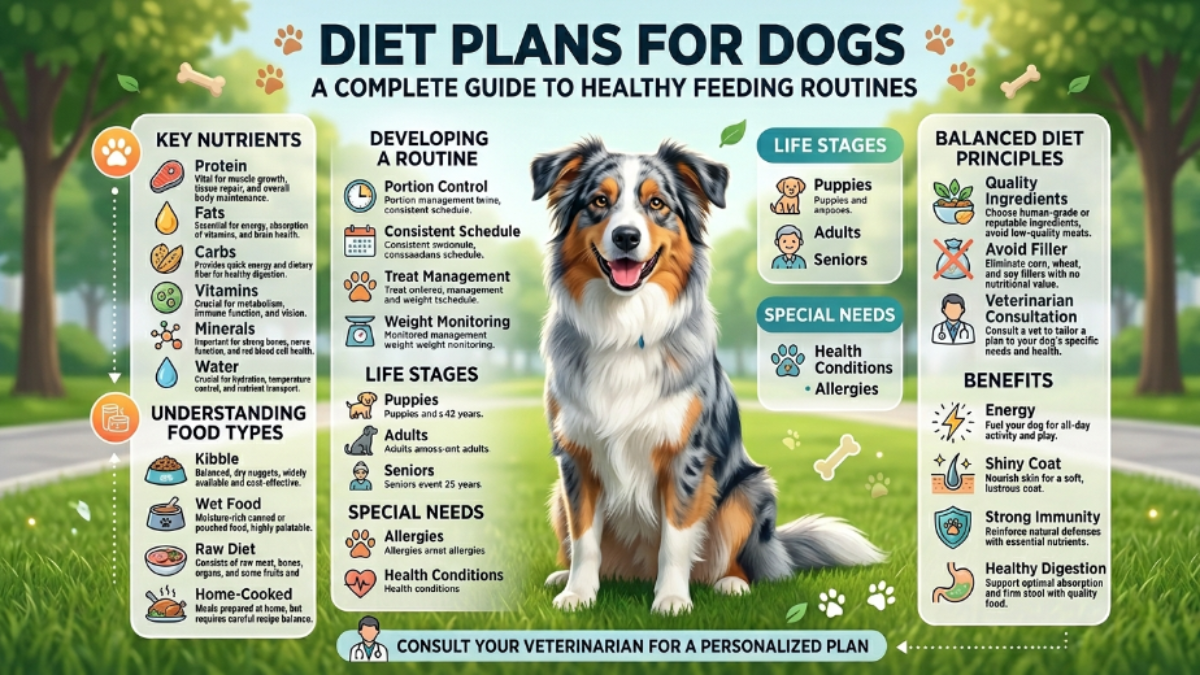
A healthy diet plan must include all essential nutrients in proper balance. Each nutrient plays a specific role in your dog’s health.
Protein
Protein is the foundation of every dog diet plan. It supports muscle growth, tissue repair, and immune function. Good sources include chicken, beef, fish, turkey, and eggs.
Fats
Fats provide energy and help maintain a shiny coat and healthy skin. Omega-3 and omega-6 fatty acids are especially important.
Carbohydrates
Carbohydrates provide energy and fiber for digestion. Healthy sources include rice, oats, and sweet potatoes.
Vitamins and Minerals
These nutrients support immunity, bone strength, and overall body function. Calcium, phosphorus, and vitamins A, D, and E are essential.
Water
Water is often overlooked but is the most important part of any diet plan. Dogs must always have access to clean, fresh water.
Dog Diet Plans Based on Age
Puppy Diet Plan
Puppies grow rapidly and need high-calorie, nutrient-rich meals. A typical puppy diet includes 3–4 meals per day. Their food should be rich in protein and DHA for brain development. Puppy-specific commercial food or carefully prepared homemade meals are both good options if properly balanced.
Adult Dog Diet Plan
Adult dogs require maintenance-level nutrition. Usually, two meals per day are enough. The focus should be on balanced protein, controlled fats, and moderate carbohydrates. Overfeeding should be avoided to prevent weight gain.
Senior Dog Diet Plan
Senior dogs need fewer calories but more joint and digestive support. Foods rich in glucosamine, fiber, and antioxidants are ideal. Soft food may also be easier for them to chew and digest.
Dog Diet Plans Based on Activity Level
Active Dogs
Working dogs or highly active breeds require high-protein and high-energy diets. They burn more calories and need extra nutrition to maintain strength and endurance.
Moderately Active Dogs
Most household dogs fall into this category. They need balanced meals that provide enough energy without leading to weight gain.
Low Activity Dogs
Less active dogs require low-calorie diets to prevent obesity. Portion control is extremely important for these dogs.
Sample Daily Dog Diet Plan
A simple daily diet plan for a healthy adult dog may look like this:
- Morning Meal: Cooked chicken with rice and boiled carrots
- Afternoon Snack: Small portion of fruits like apple slices (no seeds)
- Evening Meal: Lean beef or fish with sweet potatoes and green beans
- Water: Fresh water available all day
This type of plan ensures balanced nutrition throughout the day while maintaining energy levels.
Homemade vs Commercial Diet Plans
Both homemade and commercial diet plans can work well depending on your lifestyle and knowledge.
Homemade plans offer control over ingredients but require careful planning to avoid nutritional imbalance. Commercial diets are convenient and scientifically formulated but may contain preservatives or fillers depending on the brand.
Many pet owners choose a mixed diet plan, combining high-quality commercial food with occasional homemade meals for variety and freshness.
Common Mistakes in Dog Diet Plans
Many dog owners make mistakes without realizing the long-term impact.
One common mistake is overfeeding treats, which leads to obesity and poor nutrition balance. Another mistake is changing food too frequently, which can upset digestion.
Some owners also ignore portion sizes and feed dogs based on guesswork rather than weight and activity level. This often results in underfeeding or overfeeding.
Lastly, relying only on one type of food without variety can lead to nutrient deficiencies over time.
Tips for Creating a Perfect Dog Diet Plan
A good diet plan is simple, consistent, and balanced. Start by understanding your dog’s age, weight, and activity level.
Feed at fixed times every day to build routine. Measure food portions instead of guessing. Include variety in protein sources like chicken, fish, and beef.
Avoid human junk food, especially sugary, salty, or processed items. Regularly monitor your dog’s weight and health condition.
Most importantly, consult a veterinarian before making major changes to your dog’s diet.
Conclusion
A well-structured dog diet plan is the foundation of a healthy, active, and happy life for your pet. It ensures your dog receives the right nutrients in the right amounts while preventing common health problems like obesity and digestive issues.
Whether you choose homemade meals, commercial food, or a combination of both, consistency and balance are the key. A good diet plan is not just about feeding it’s about caring, planning, and understanding your dog’s unique needs.
FAQs
1. How many times should I feed my dog daily?
Puppies need 3–4 meals, while adult dogs usually need 2 meals per day.
2. Can I change my dog’s diet plan suddenly?
No, sudden changes can cause digestive issues. Always transition gradually.
3. What is the best diet plan for dogs?
A balanced diet including protein, healthy fats, carbohydrates, vitamins, and minerals is best.
4. Are homemade diet plans safe for dogs?
Yes, but only if they are properly balanced and ideally approved by a vet.
5. How do I know if my dog’s diet plan is working?
Healthy weight, shiny coat, good energy levels, and normal digestion are good signs.
Add a Comment