Understanding toxic foods for dogs is just as important as knowing what to feed them. Many pet owners unknowingly share human foods with their dogs, thinking it’s harmless or even healthy. However, some everyday foods that are safe for humans can be extremely dangerous even life-threatening for dogs.
Dogs process food differently than humans. Their digestive system and metabolism cannot handle certain ingredients, chemicals, or natural compounds found in common foods. What seems like a small treat to you could lead to serious health issues like kidney failure, seizures, internal bleeding, or even death in dogs.
This is why awareness is crucial. A responsible dog owner doesn’t just focus on nutrition but also understands food safety. Think of your dog as a sensitive system—what goes inside directly affects what comes out. One wrong bite can disrupt their entire health balance.
Why Some Foods Are Toxic to Dogs
Not all foods are universally safe because dogs lack certain enzymes needed to break down specific compounds. Some foods contain chemicals that interfere with a dog’s nervous system, organs, or blood cells.
For example, chocolate contains theobromine, which dogs cannot metabolize properly. Even small amounts can cause heart problems or seizures. Similarly, onions and garlic damage red blood cells, leading to anemia.
Another issue is portion size sensitivity. Foods that may not be immediately toxic in tiny amounts can still become dangerous when consumed repeatedly or in larger quantities.
Understanding this helps prevent accidental poisoning and ensures your dog lives a longer, healthier life.
Most Dangerous Toxic Foods for Dogs
Chocolate
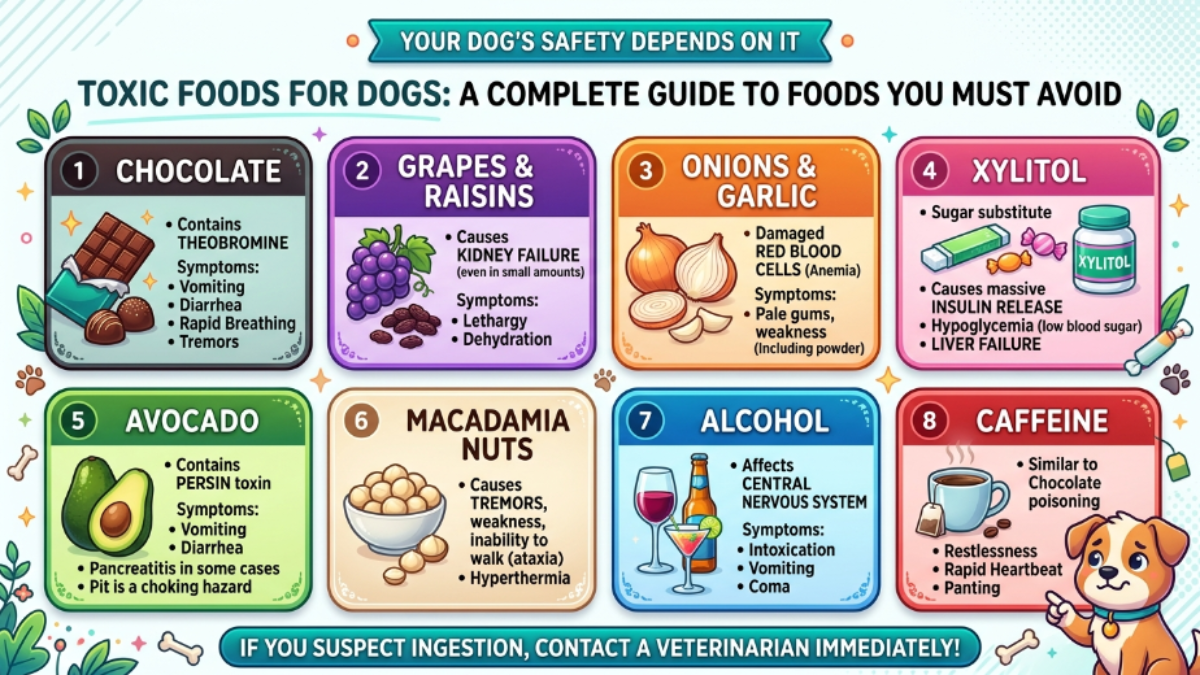
Chocolate is one of the most well-known toxic foods for dogs. It contains theobromine and caffeine, both of which affect the nervous system and heart. Dark chocolate and baking chocolate are the most dangerous forms. Even a small piece can cause vomiting, restlessness, rapid heartbeat, and seizures.
Onions and Garlic
Onions, garlic, and related vegetables damage a dog’s red blood cells. This can lead to a condition called hemolytic anemia. Symptoms may include weakness, pale gums, and lethargy. These ingredients are harmful whether raw, cooked, or powdered.
Grapes and Raisins
Grapes and raisins are extremely toxic and can cause sudden kidney failure in dogs. Even a small amount can trigger vomiting, diarrhea, and loss of appetite. The exact toxic substance is still unknown, but the risk is very serious.
Xylitol (Artificial Sweetener)
Xylitol is found in sugar-free gum, candies, and some baked goods. It causes a rapid release of insulin in dogs, leading to dangerous drops in blood sugar. In severe cases, it can cause liver failure.
Alcohol
Alcohol is highly toxic to dogs, even in small amounts. It affects the liver and brain, leading to vomiting, confusion, breathing problems, and in severe cases, coma or death.
Caffeine
Caffeine is found in coffee, tea, energy drinks, and some medications. It stimulates the nervous system and can cause restlessness, rapid breathing, and heart issues in dogs.
Other Harmful Foods for Dogs
Avocado
Avocados contain a substance called persin, which can cause vomiting and diarrhea in dogs. While small amounts may not always be fatal, it is still considered unsafe.
Macadamia Nuts
These nuts are highly toxic and can cause weakness, tremors, vomiting, and high body temperature in dogs. Even a few nuts can trigger symptoms.
Cooked Bones
Cooked bones may splinter easily and cause choking or internal injuries. They can damage the digestive tract and lead to serious complications.
Raw Dough
Raw dough containing yeast can expand in a dog’s stomach, causing bloating and alcohol production inside the body. This can lead to life-threatening conditions.
High-Fat Foods
Foods like fried items, bacon, or greasy meats can cause pancreatitis, a painful and serious inflammation of the pancreas.
Symptoms of Food Poisoning in Dogs
Recognizing early signs of food poisoning can save your dog’s life. Symptoms vary depending on the food consumed, but common warning signs include:
- Vomiting or diarrhea
- Loss of appetite
- Weakness or lethargy
- Excessive drooling
- Tremors or seizures
- Difficulty breathing
- Pale or yellow gums
If you notice any of these symptoms after your dog eats something unusual, immediate veterinary care is necessary.
What to Do If Your Dog Eats Toxic Food
If you suspect your dog has eaten something toxic, act quickly. Do not wait for symptoms to appear.
First, try to identify what and how much was consumed. Contact your veterinarian immediately and follow their instructions. In some cases, inducing vomiting may be recommended, but only under professional guidance.
Never try home remedies without expert advice, as some actions can make the situation worse.
Safe Alternatives to Toxic Foods
Instead of risky human foods, there are many safe and healthy alternatives you can give your dog:
- Carrots instead of sugary snacks
- Apple slices (without seeds) instead of candy
- Cooked chicken instead of processed meat
- Pumpkin for digestion support
- Blueberries for antioxidants
These options allow you to treat your dog without putting their health at risk.
How to Prevent Accidental Poisoning
Prevention is always better than treatment. Keep toxic foods out of reach, especially in kitchens and dining areas. Educate family members, especially children, about what foods are unsafe for dogs.
Always check ingredient labels before sharing any human food. Even small amounts of hidden ingredients like xylitol can be dangerous.
Training your dog to avoid eating from the floor or strangers also reduces risk significantly.
Conclusion
Knowing about toxic foods for dogs is essential for every pet owner who wants to keep their dog safe and healthy. Many dangerous foods are common in households, which makes awareness even more important.
By avoiding harmful ingredients like chocolate, onions, grapes, and artificial sweeteners, you can prevent serious health emergencies. Instead, focus on safe, nutritious alternatives that support your dog’s well-being.
A little caution today can save your dog’s life tomorrow. Responsible feeding is one of the greatest ways to show love and care for your furry companion.
FAQs
1. What is the most toxic food for dogs?
Chocolate, grapes, and xylitol are among the most dangerous foods for dogs.
2. Can a small amount of toxic food harm my dog?
Yes, even small amounts of certain foods like xylitol or grapes can be harmful.
3. What should I do if my dog eats chocolate?
Contact a veterinarian immediately. Do not wait for symptoms to appear.
4. Are fruits safe for dogs?
Some fruits like apples and blueberries are safe, but grapes and raisins are toxic.
5. Can dogs recover from food poisoning?
Yes, if treated quickly. Early veterinary care greatly improves recovery chances.
Add a Comment