
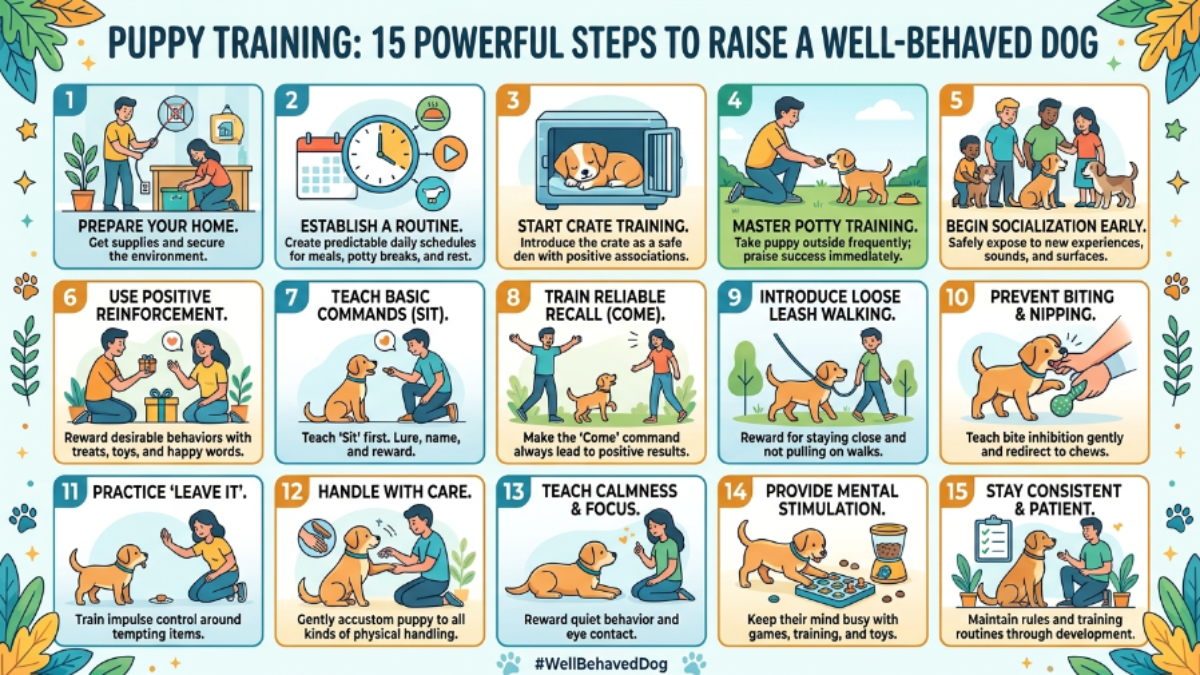
Puppy training is one of the most important steps in raising a happy and well-behaved dog. It’s not just about teaching commands it’s about building communication, trust, and lifelong habits. If done correctly, puppy training creates a strong bond between you and your pet while preventing unwanted behaviors.
When you first bring a puppy home, everything is new to them. Sounds, smells, and routines can feel overwhelming. That’s why early puppy training helps your dog adjust quickly and confidently. With consistency, patience, and the right techniques, you’ll set the foundation for a disciplined and loving companion.
Moreover training isn’t a one-time task. It’s an ongoing process that evolves as your puppy grows. From basic commands to advanced obedience, every step plays a role in shaping your dog’s personality.
🐾 Why Puppy Training Matters
Building Trust and Bond
Puppy training strengthens the relationship between you and your dog. When you train consistently, your puppy learns to trust you as a leader. This trust is essential for obedience and emotional security.
Dogs thrive on structure. By setting clear rules through puppy training, you’re helping your pet understand what’s expected. This reduces confusion and anxiety, making your puppy more relaxed and cooperative.
Preventing Behavioral Issues
Untrained puppies often develop bad habits such as excessive barking, chewing furniture, or jumping on guests. Early puppy training helps prevent these problems before they become difficult to manage.
For example, teaching boundaries early ensures your dog doesn’t develop destructive tendencies. It’s far easier to guide behavior during the puppy stage than to correct it later.
⏰ When to Start Puppy Training
Ideal Age to Begin
The best time to start puppy training is between 8 to 10 weeks of age. At this stage, puppies are highly receptive and eager to learn. Their brains are like sponges, absorbing new information quickly.
However, training should always match their developmental level. Keep sessions short, fun, and engaging to maintain their attention.
Early Socialization Importance
Socialization is a key part of puppy training. Exposing your puppy to different people, pets, and environments helps them grow into a confident adult dog.
Without proper socialization, puppies may develop fear or aggression. Gradual exposure ensures they remain calm in new situations.
🧰 Essential Puppy Training Supplies
Training Tools Checklist
Before starting puppy training, make sure you have the right tools:
- Collar and leash
- Training treats
- Crate or kennel
- Chew toys
- Clicker (optional)
These tools make training more effective and structured.
Choosing the Right Treats
Treats play a vital role in puppy training. Choose small, soft, and tasty rewards that your puppy loves. High-value treats work best for teaching new commands.
However, don’t overfeed. Balance treats with regular meals to maintain your puppy’s health.
🎓 Basic Commands Every Puppy Should Learn
Sit Command
“Sit” is usually the first command taught in puppy training. It’s simple and helps establish control.
Steps:
- Hold a treat above your puppy’s nose
- Move it slightly backward
- When they sit, reward immediately
Repeat regularly for consistency.
Stay Command
“Stay” teaches patience and discipline. Start with short durations and gradually increase time.
Come Command
This command ensures your puppy returns to you when called. It’s essential for safety, especially outdoors.
🚽 House Training Your Puppy
Potty Training Schedule
Consistency is key in puppy training for housebreaking. Take your puppy outside:
- After waking up
- After meals
- After playtime
Reward them immediately after they go in the right place.
Common Mistakes to Avoid
- Punishing accidents
- Inconsistent schedule
- Not supervising
Instead, focus on positive reinforcement and patience.
🏠 Crate Training Made Easy
Benefits of Crate Training
Crate training provides a safe space for your puppy. It also helps with house training and prevents destructive behavior.
Step-by-Step Guide
- Introduce the crate gradually
- Add comfortable bedding
- Use treats to encourage entry
- Keep sessions short
Never use the crate as punishment.
🌍 Socializing Your Puppy
Meeting People and Pets
Introduce your puppy to different people and animals in a controlled environment. Positive experiences are crucial for proper puppy training.
Handling New Environments
Take your puppy to parks, streets, and different locations. This exposure builds confidence and reduces fear.
🐕 Managing Puppy Behavior
Biting and Chewing
Puppies explore the world with their mouths. Provide chew toys and redirect their attention when they bite.
Barking Problems
Identify triggers for barking and address them calmly. Avoid shouting, as it may reinforce the behavior.
🎯 Positive Reinforcement Techniques
Reward-Based Training
Positive reinforcement is the most effective puppy training method. Reward good behavior with treats, praise, or playtime.
Avoiding Punishment
Punishment can create fear and damage trust. Focus on encouraging desired behaviors instead.
🚀 Advanced Puppy Training Tips
Leash Training
Start leash training early. Keep walks short and reward your puppy for walking calmly beside you.
Obedience Skills
Advanced commands like “heel” and “leave it” improve control and safety.
⚠️ Common Puppy Training Challenges
Separation Anxiety
Gradually increase alone time to prevent anxiety. Provide toys and a comfortable space.
Stubborn Behavior
Stay patient and consistent. Puppies learn at different speeds, so don’t rush the process.
❓ Puppy Training FAQs
1. How long does puppy training take?
Puppy training can take several months. Basic commands may take weeks, while full obedience requires ongoing practice.
2. What is the best training method?
Positive reinforcement is the most effective and humane puppy training method.
3. Can older dogs be trained?
Yes, but puppy training is easier because young dogs learn faster.
4. How often should I train my puppy?
Short sessions (5–10 minutes) 2–3 times daily work best.
5. What if my puppy doesn’t listen?
Stay consistent and patient. Avoid punishment and reinforce good behavior.
6. Is professional training necessary?
Not always, but it can help if you face difficulties.
🔚 Conclusion
Puppy training is a rewarding journey that shapes your dog’s behavior and strengthens your bond. With patience, consistency, and the right techniques, you can raise a well-behaved and happy companion.
Remember, every puppy is unique. Some may learn quickly, while others need more time. Stay committed, and you’ll see progress over time.
Add a Comment