
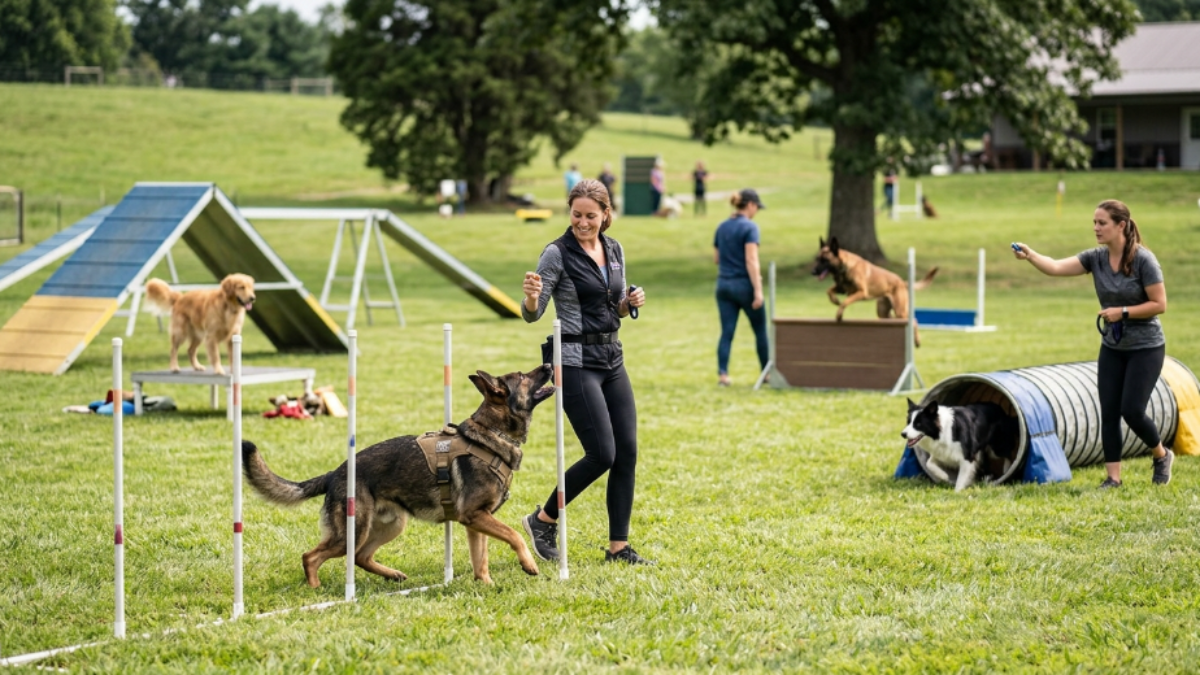
Once your dog has mastered basic commands like sit, stay, and come, the next step is advanced dog training. This stage is all about refining behavior, improving obedience under distractions, and teaching more complex commands that require focus, discipline, and strong communication between you and your dog.
Advanced training is not just for show dogs or working dogs—it is for any dog owner who wants better control, stronger bonding, and a more intelligent, responsive pet. At this level, training becomes less about basic obedience and more about precision, timing, and mental stimulation.
Think of basic training as learning the alphabet, while advanced training is like writing full sentences and stories. Your dog already knows the basics; now it’s time to challenge their mind and improve their real-world behavior.
Why Advanced Dog Training Matters
Advanced training plays a powerful role in shaping a dog’s long-term behavior. One of the biggest benefits is improved control in real-life situations. A dog that responds to commands even in crowded or distracting environments is much safer and easier to manage.
It also provides mental stimulation, which is just as important as physical exercise. Dogs are intelligent animals, and without mental challenges, they can become bored, anxious, or destructive. Advanced training keeps their brain active and engaged.
Another major benefit is strengthened owner-dog communication. At this level, your dog learns to understand subtle cues, hand signals, and even body language. This creates a deeper level of trust and understanding.
Advanced training is also useful for behavior correction, especially for dogs that still struggle with impulse control, jumping, or aggression in certain situations.
Core Principles of Advanced Dog Training
Advanced training requires more precision than basic training. A few key principles make the process successful:
Focus Under Distractions
Your dog must learn to obey commands even when there are distractions like other dogs, people, or noises.
Timing and Accuracy
Rewards must be given at the exact moment the dog performs the correct behavior. Even a few seconds delay can confuse them.
Gradual Difficulty Increase
Start in controlled environments, then slowly introduce real-world challenges. This helps your dog build confidence step by step.
Clear Communication
At this level, consistency is everything. Mixed signals can break progress quickly.
Advanced Commands Every Dog Should Learn
Heel Command
The “heel” command teaches your dog to walk beside you without pulling or wandering. This is especially useful in public places. Start with a leash, keep your dog close to your side, and reward them for staying in position. Over time, practice without a leash in safe environments.
Wait Command
The “wait” command is slightly different from “stay.” It teaches your dog to pause temporarily before moving forward. This is useful at doors, roads, or feeding time. It helps improve impulse control.
Place Command
This command instructs your dog to go to a specific spot, such as a bed or mat, and remain there until released. It is very useful for controlling behavior when guests arrive or during meal times.
Leave Distractions Command
At this level, “leave it” becomes more advanced. Your dog learns to ignore moving objects, food, or other animals even in high-distraction environments.
Recall Under Distraction
This is an advanced version of “come.” Your dog must return to you immediately, even when playing, running, or distracted by other animals.
Off-Leash Training Basics
Off-leash training is one of the most advanced and challenging stages. It requires complete trust and reliability from your dog.
Start in a fully enclosed, safe area. Use a long leash first before completely removing it. Practice recall commands repeatedly. Gradually increase distance and distractions.
Never attempt off-leash training in unsafe environments until your dog has 100% reliable recall. This level of training can take weeks or even months depending on the dog’s temperament.
Behavioral Refinement in Advanced Training
Advanced training is also about polishing behavior, not just teaching commands.
Impulse Control
Dogs learn to control excitement in situations like meeting new people, seeing food, or encountering other dogs.
Calm Behavior in Public
Your dog should remain calm in busy places like parks, streets, or vet clinics.
Greeting Manners
Instead of jumping on people, your dog learns to sit politely when greeting others.
Common Challenges in Advanced Dog Training
One of the biggest challenges is lack of consistency. Advanced training requires daily practice, not occasional sessions.
Another issue is overexcitement, especially in energetic breeds. Dogs may forget commands when stimulated, so training must focus on calm behavior first.
Some owners also move too fast into difficult environments. If your dog is not ready, this can cause confusion and setbacks.
Patience and structured progression are key to overcoming these challenges.
Tips for Successful Advanced Training
Keep training sessions short but focused. Around 15–20 minutes per session is ideal.
Use high-value rewards like special treats or toys to maintain motivation.
Practice in different environments to generalize behavior. A dog that only listens at home may not obey in public unless trained properly.
Always finish training on a positive note to keep your dog confident and engaged.
Conclusion
Advanced dog training transforms a well-behaved pet into a highly disciplined and intelligent companion. It goes beyond simple obedience and focuses on precision, control, and trust in real-life situations.
With patience, consistency, and the right approach, any dog can reach an advanced level of training. The result is not just better behavior, but a stronger bond between you and your dog that is built on understanding and respect.
FAQs
1. When should I start advanced dog training?
Advanced training should begin after your dog has fully mastered basic commands.
2. How long does advanced training take?
It can take several weeks to months depending on the dog’s age, breed, and consistency.
3. Is off-leash training safe?
Yes, but only after your dog has perfect recall in controlled environments.
4. Can all dog breeds learn advanced training?
Yes, but some breeds may learn faster than others due to intelligence and temperament.
5. Do I need a professional trainer for advanced training?
Not always, but professional guidance can speed up progress and improve accuracy.
Add a Comment