
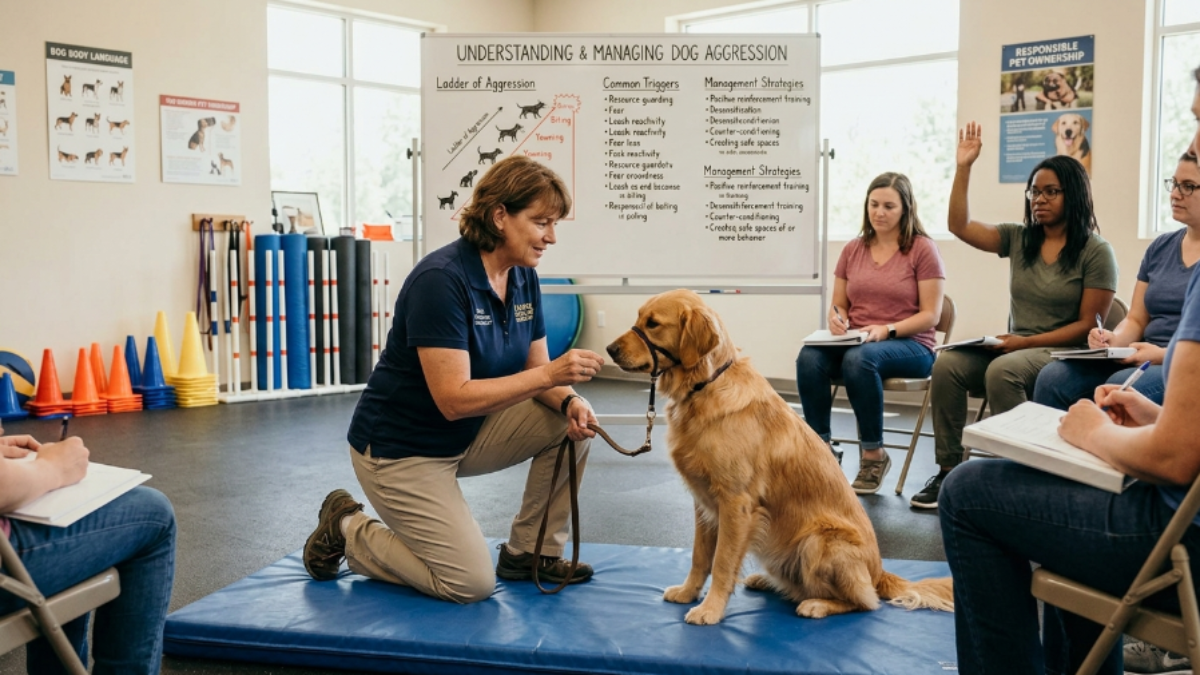
Dog aggression is one of the most misunderstood aspects of canine behavior. It is not simply “bad behavior” but a form of communication used by dogs to express fear, stress, dominance, or discomfort. Understanding the root cause of aggression is essential for managing it effectively and ensuring a safe environment for both the dog and others.
We focus on identifying triggers, interpreting signals, and applying structured solutions to reduce and control aggressive behavior in dogs.
Types of Dog Aggression
1. Fear-Based Aggression
Fear aggression occurs when a dog feels threatened or cornered. These dogs often display warning signs such as growling, trembling, or snapping before escalating.
2. Territorial Aggression
Dogs naturally protect their space. Territorial aggression is triggered when a dog perceives an intruder in its home or environment.
3. Possessive Aggression (Resource Guarding)
This happens when a dog becomes aggressive over food, toys, or other valued items. It is a common behavior that requires early correction.
4. Protective Aggression
Some dogs become aggressive when they feel the need to protect their owner or family members.
5. Social Aggression
Occurs when a dog tries to assert dominance over other dogs or humans, often due to poor socialization.
6. Pain-Induced Aggression
Dogs experiencing pain or illness may react aggressively when touched or approached.
Common Causes of Dog Aggression
1. Lack of Socialization
Dogs that are not exposed to different environments, people, and animals early in life are more likely to develop aggressive tendencies.
2. Fear and Anxiety
Unfamiliar situations or past traumatic experiences can lead to defensive aggression.
3. Poor Training or Inconsistent Discipline
Lack of structure and unclear boundaries can confuse dogs, leading to behavioral issues.
4. Genetic Factors
Some breeds may have stronger guarding instincts, though behavior is largely influenced by training and environment.
5. Frustration and Boredom
Dogs with excess energy and no outlet may display aggression as a result of pent-up frustration.
Warning Signs of Aggression
Recognizing early signs can prevent escalation:
- Growling or snarling
- Stiff body posture
- Intense staring
- Raised hackles (fur standing up)
- Baring teeth
- Sudden snapping or lunging
Understanding these signals allows timely intervention before the behavior worsens.
Effective Strategies to Manage Dog Aggression
1. Early Socialization
Expose your dog to different environments, people, and other animals from a young age to build confidence and reduce fear.
2. Positive Reinforcement Training
Reward good behavior with treats, praise, or toys. Avoid punishment-based methods, as they can increase fear and aggression.
3. Identify and Remove Triggers
Observe what causes aggressive reactions and gradually desensitize your dog to those triggers in a controlled manner.
4. Establish Clear Boundaries
Consistency in commands and routines helps dogs understand expectations and reduces confusion.
5. Provide Regular Exercise
Physical activity helps release excess energy and reduces stress, minimizing aggressive tendencies.
6. Seek Professional Help
For severe cases, consult a certified dog trainer or behaviorist for personalized guidance.
Mistakes to Avoid When Dealing with Aggression
1. Punishing Aggressive Behavior
Harsh punishment can worsen aggression and damage trust.
2. Ignoring Early Signs
Small warning signs can escalate into serious aggression if not addressed.
3. Inconsistent Training
Mixed signals confuse dogs and hinder progress.
4. Forcing Interaction
Never force a fearful or aggressive dog into uncomfortable situations.
Preventing Aggression in Dogs
1. Start Training Early
Begin obedience training during puppyhood to build good habits.
2. Maintain a Routine
Dogs thrive on consistency, which reduces anxiety and stress.
3. Encourage Calm Behavior
Reward calm and relaxed actions to reinforce positive habits.
4. Provide Mental Stimulation
Use toys and activities that challenge your dog’s mind and reduce boredom.
Why Understanding Aggression Is Crucial
Addressing dog aggression is essential for ensuring safety, improving quality of life, and strengthening the bond between dog and owner. With the right approach, most aggressive behaviors can be managed or significantly reduced.
Conclusion
Managing dog aggression requires patience, consistency, and understanding. By identifying causes, recognizing warning signs, and applying proven training methods, we can guide dogs toward calmer and more balanced behavior.
Add a Comment