
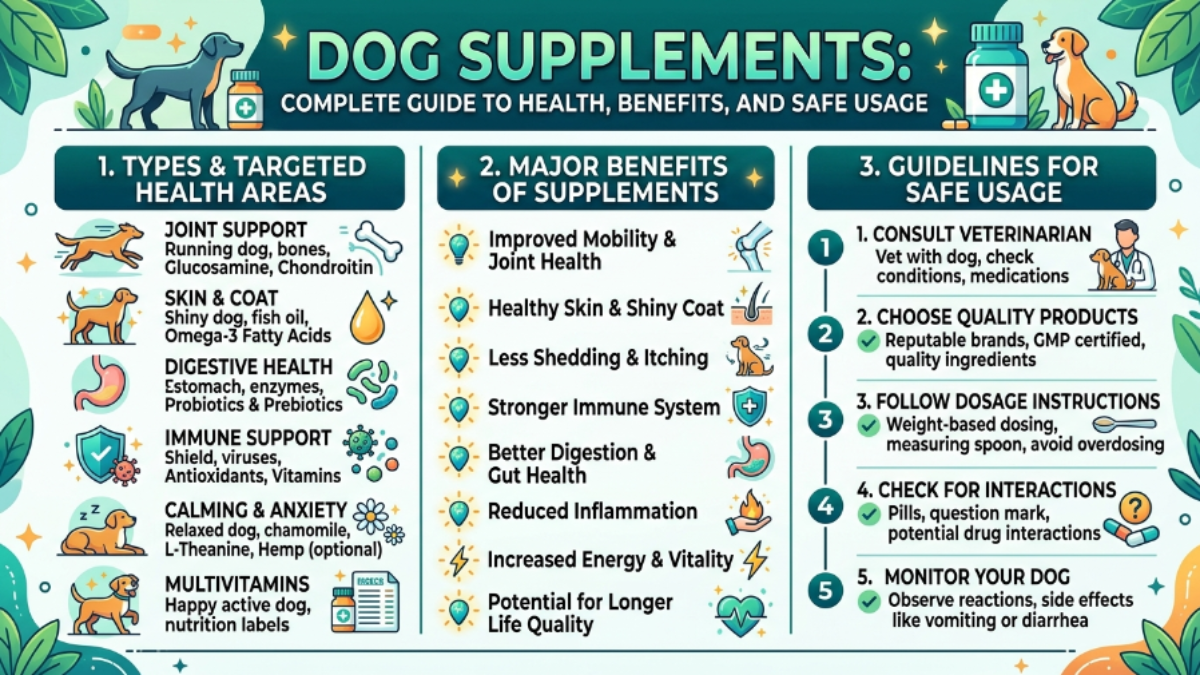
Dog supplements are additional nutrients given to dogs to support their overall health, improve immunity, and fill nutritional gaps in their regular diet. While a balanced dog food plan should already provide most essential nutrients, supplements are often used to support specific needs like joint health, skin condition, digestion, and immunity.
In modern pet care, supplements have become very popular because dogs today face issues like processed diets, reduced physical activity, and environmental stress. However, supplements are not a replacement for proper food they are a support system for better health.
Think of supplements like “extra support pillars” for your dog’s body. They help strengthen areas that may need additional care, especially in growing puppies, active adult dogs, and aging senior dogs.
Why Dog Supplements are Important
Dog supplements play an important role in maintaining long-term health. One major benefit is nutritional support. Even high-quality dog food may sometimes lack certain nutrients depending on the dog’s condition.
Another key benefit is preventive health care. Supplements can help reduce the risk of joint problems, skin allergies, digestive issues, and weak immunity before they become serious problems.
They are also useful for age-related support, especially for senior dogs who may struggle with arthritis, low energy, or weakened immunity.
In simple terms, supplements help dogs stay stronger, healthier, and more active throughout their life.
Types of Dog Supplements
1. Joint and Bone Supplements
These supplements are commonly used for older dogs or large breeds. They often contain glucosamine, chondroitin, and MSM, which help improve joint flexibility and reduce pain caused by arthritis or hip dysplasia.
2. Multivitamin Supplements
Multivitamins provide a combination of essential vitamins and minerals like Vitamin A, B-complex, C, D, and E. They support overall health, energy levels, and immune function.
3. Skin and Coat Supplements
These supplements improve skin health and give your dog a shiny, healthy coat. They usually contain omega-3 and omega-6 fatty acids, which help reduce itching, dryness, and shedding.
4. Digestive Health Supplements
Digestive supplements include probiotics and prebiotics, which improve gut health and help with digestion. They are especially useful for dogs with sensitive stomachs or frequent diarrhea.
5. Immune System Boosters
These supplements strengthen the immune system and help dogs fight infections. Ingredients like antioxidants, vitamins, and herbal extracts are commonly used.
6. Calming Supplements
Calming supplements are used for dogs with anxiety, stress, or hyperactivity. They often include natural ingredients like chamomile, L-theanine, or valerian root.
When Should Dogs Take Supplements?
Not all dogs need supplements all the time. They are usually recommended in specific situations:
- Puppies during growth stages
- Senior dogs with aging issues
- Dogs recovering from illness or surgery
- Dogs with poor diet or nutritional gaps
- Active or working dogs with high energy needs
- Dogs with skin, joint, or digestive problems
A veterinarian should always guide supplement use based on your dog’s condition.
Natural vs Commercial Supplements
Natural Supplements
Natural supplements come from whole foods like fish oil, pumpkin, or bone broth. They are gentle and easy to digest but may take longer to show results.
Commercial Supplements
These are specially formulated products available in tablets, powders, or chewable form. They provide precise doses and faster results but must be chosen carefully from trusted brands.
Benefits of Dog Supplements
Dog supplements offer many benefits when used correctly:
- Improved joint mobility and reduced pain
- Healthier skin and shinier coat
- Better digestion and gut balance
- Stronger immune system
- Increased energy levels
- Reduced anxiety and stress
However, benefits depend on correct dosage and proper usage.
Risks of Overusing Supplements
Too many supplements or incorrect usage can cause problems. Over-supplementation may lead to:
- Vitamin toxicity
- Kidney or liver stress
- Digestive issues
- Imbalanced nutrition
This is why self-medication is not recommended. Always follow veterinary advice.
How to Choose the Right Supplements
When selecting supplements for your dog, consider the following:
- Your dog’s age and breed
- Current health condition
- Ingredient quality and safety
- Veterinarian recommendations
- Trusted and certified brands
Avoid cheap or unknown products that do not clearly list ingredients.
Tips for Safe Supplement Use
Start with small doses and observe your dog’s reaction. Always give supplements with food unless otherwise advised.
Maintain a consistent schedule for better results. Do not mix multiple supplements without professional guidance.
Regular vet checkups are important to monitor progress and adjust dosage if needed.
Conclusion
Dog supplements can be a powerful addition to your pet’s health routine when used correctly. They support nutrition, improve immunity, and help manage specific health conditions like joint pain, skin issues, and digestive problems.
However, supplements should always be used responsibly and under veterinary guidance. The foundation of good health is still a balanced diet, regular exercise, and proper care.
When combined with a healthy lifestyle, supplements can help your dog live a stronger, happier, and more comfortable life.
FAQs
1. Do all dogs need supplements?
No, only dogs with specific health needs or nutritional gaps require supplements.
2. Can I give human supplements to my dog?
No, human supplements are not safe for dogs and can be harmful.
3. What is the most important dog supplement?
It depends on the dog, but omega-3, probiotics, and joint supplements are commonly used.
4. Are dog supplements safe?
Yes, if used in proper dosage and recommended by a veterinarian.
5. How long does it take for supplements to work?
It can take a few weeks to a couple of months depending on the supplement type and condition.
Add a Comment