
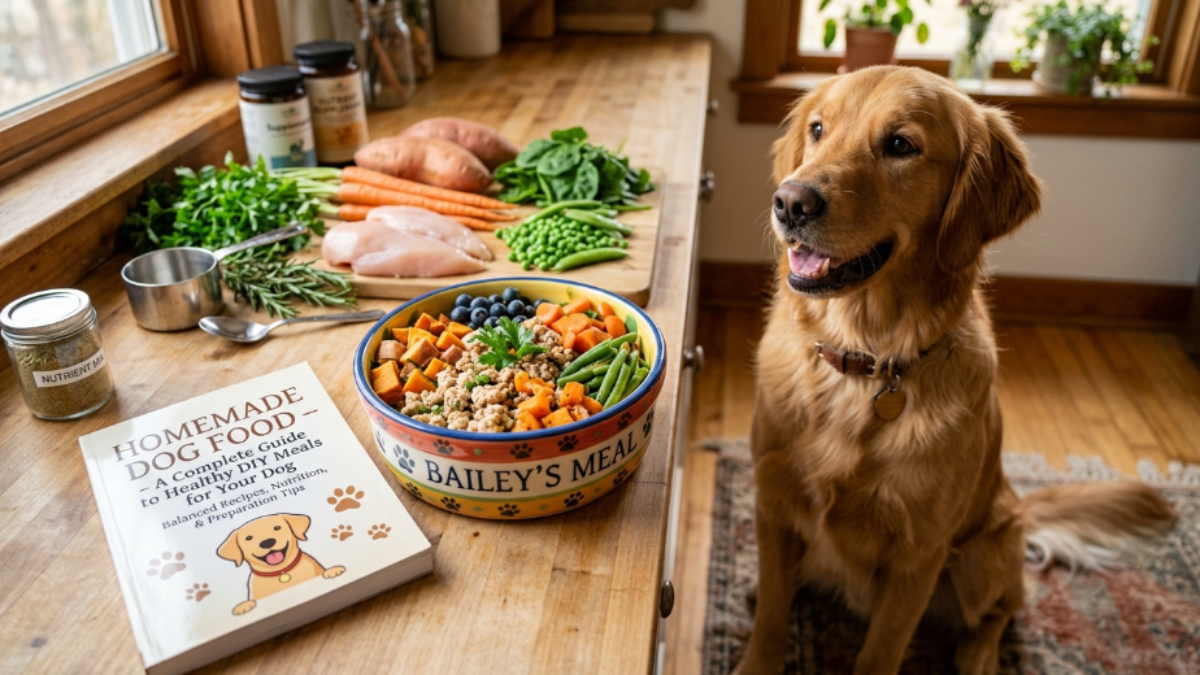
Homemade dog food has become a growing trend among pet owners who want more control over what their dogs eat. Instead of relying only on commercial kibble or canned food, many people now prefer preparing fresh meals at home using natural ingredients. The idea sounds simple and loving cook for your dog the same way you cook for your family but there is more to it than just mixing meat and rice in a bowl.
The main reason behind this shift is concern about quality, safety, and transparency. Many dog owners want to avoid artificial preservatives, low-quality fillers, and unknown meat sources often found in processed foods. Homemade diets give you full control over ingredients, freshness, and nutrition balance. However, without proper planning, homemade dog food can also lead to nutritional deficiencies, which is why understanding the basics is extremely important.
Think of homemade dog food like building a house. You can’t just stack bricks randomly; you need a strong foundation, structure, and balance. Similarly, your dog’s diet must include the right mix of protein, fats, carbohydrates, vitamins, and minerals to keep them healthy and active.
Why Choose Homemade Dog Food?
Many pet owners switch to homemade diets for emotional and health-related reasons. Dogs are family, and feeding them fresh meals feels like an act of care and love. But beyond emotions, there are practical benefits too.
One of the biggest advantages is ingredient control. You decide exactly what goes into your dog’s food. This is especially helpful for dogs with allergies or sensitive stomachs. For example, if your dog reacts poorly to chicken or grains, you can easily adjust recipes to avoid those ingredients.
Another benefit is freshness. Homemade meals are free from long shelf storage, artificial preservatives, and chemical additives. Fresh food often improves digestion, coat health, and energy levels. Some dog owners also report better appetite and fewer digestive issues after switching to homemade meals.
However, it’s important to remember that homemade diets require responsibility. Unlike commercial dog food, which is formulated to meet nutritional standards, homemade meals must be carefully balanced to avoid long-term health problems.
Basic Nutritional Needs for Dogs
Before preparing homemade dog food, you must understand what your dog actually needs to stay healthy.
Dogs require six essential nutrients: protein, fats, carbohydrates, vitamins, minerals, and water. Each plays a specific role in maintaining health.
Protein is the most important component. It supports muscle growth, tissue repair, and immune strength. Good sources include chicken, beef, fish, turkey, and eggs. Fats provide energy and support skin and coat health. Carbohydrates like rice, oats, and sweet potatoes supply energy and fiber for digestion.
Vitamins and minerals are equally important. Calcium supports strong bones, while vitamins like A, D, and E help with vision, immunity, and cell function. Without proper balance, dogs can suffer from weakness, poor coat condition, or even serious health issues over time.
Veterinary nutrition experts often warn that homemade diets must be carefully planned or guided by professionals to ensure they meet complete nutritional requirements.
Best Ingredients for Homemade Dog Food
Choosing the right ingredients is the foundation of a healthy homemade diet. Not all human foods are safe for dogs, so careful selection is key.
Protein Sources
- Chicken (boiled or baked, no seasoning)
- Lean beef
- Turkey
- Salmon or other boneless fish
- Eggs
Carbohydrates
- Brown rice
- Oats
- Sweet potatoes
- Pumpkin
Vegetables
- Carrots
- Green beans
- Spinach
- Peas
Healthy Fats
- Fish oil
- Olive oil (small amounts)
- Flaxseed oil
These ingredients provide a balanced mix of energy, nutrients, and fiber. Always cook meats thoroughly to avoid bacteria, and avoid adding salt, spices, onions, or garlic, as they are toxic to dogs.
Simple Homemade Dog Food Recipes
Chicken and Rice Meal
This is one of the most common homemade dog food recipes. It is gentle on the stomach and perfect for dogs with digestive issues.
Boil chicken breast until fully cooked, then shred it into small pieces. Cook brown rice separately until soft. Mix both ingredients together and add a small amount of boiled carrots for extra nutrition. This simple meal is easy to digest and provides a balanced mix of protein and carbohydrates.
Beef and Vegetable Bowl
Lean beef is a great protein source for active dogs. Cook the beef thoroughly and remove excess fat. Add steamed vegetables like carrots, peas, and green beans. Combine with cooked oats or rice to create a complete meal.
Fish and Sweet Potato Recipe
Fish like salmon provides omega-3 fatty acids that improve coat shine and skin health. Bake or boil the fish, remove bones carefully, and mix with mashed sweet potatoes and spinach. This recipe is especially good for dogs with dry skin.
Common Mistakes in Homemade Dog Food
Many pet owners make mistakes when preparing homemade meals, often without realizing the long-term effects.
One common mistake is unbalanced nutrition. Feeding only meat without vegetables or carbohydrates can lead to deficiencies. Dogs need a complete diet, not just protein.
Another mistake is using unsafe ingredients. Foods like onions, garlic, chocolate, grapes, and raisins are toxic to dogs and should always be avoided.
Over-supplementing is also a problem. Some owners add too many vitamins or oils thinking it improves health, but excess nutrients can be harmful.
Finally, inconsistency in diet can upset a dog’s digestion. Dogs thrive on routine, so sudden changes in food should be avoided.
Homemade Dog Food vs Commercial Dog Food
Both homemade and commercial dog food have advantages and disadvantages. Understanding the difference helps you make a better decision.
| Feature | Homemade Dog Food | Commercial Dog Food |
|---|---|---|
| Ingredient Control | Full control | Limited transparency |
| Nutrition Balance | Requires planning | Scientifically balanced |
| Convenience | Time-consuming | Easy and ready-to-serve |
| Cost | Can be expensive | More affordable options available |
| Safety | Depends on preparation | Strict quality control |
Homemade food offers freshness and customization, while commercial food provides convenience and nutritional consistency. Many dog owners choose a hybrid approach by mixing both.
Is Homemade Dog Food Safe?
Homemade dog food is safe when prepared correctly, but it requires knowledge and responsibility. The biggest risk is nutritional imbalance over time. Dogs that lack essential nutrients may develop bone issues, weak immunity, or organ problems.
Veterinarians often recommend consulting a pet nutrition expert before switching to homemade diets. Some dogs with medical conditions may require specially formulated commercial diets instead.
Safety also depends on food handling. Raw ingredients must be cleaned properly, and cooked food should be stored safely to avoid bacterial growth.
Tips for Feeding Homemade Dog Food
If you decide to feed your dog homemade meals, consistency and balance are key.
Start slowly by mixing homemade food with their regular diet to avoid digestive issues. Always maintain proper portion sizes based on your dog’s weight, age, and activity level.
Rotate ingredients to ensure a variety of nutrients. Monitor your dog’s health, coat condition, energy level, and digestion. Any sudden changes should be discussed with a veterinarian.
Most importantly, avoid guessing nutrition. Dogs have specific dietary needs, and balance is more important than variety alone.
Conclusion
Homemade dog food can be a wonderful way to care for your pet, offering freshness, control, and emotional satisfaction. However, it is not as simple as cooking leftovers or mixing random ingredients. A successful homemade diet requires understanding nutrition, maintaining balance, and ensuring safety in every meal.
When done correctly it can improve your dog’s health, energy, and happiness. But when done carelessly, it can create serious health risks. The best approach is a balanced one combining knowledge, veterinary guidance, and love for your pet.
FAQs
1. Is homemade dog food better than store-bought food?
It depends. Homemade food offers freshness and control, while commercial food provides balanced nutrition and convenience.
2. Can I feed my dog homemade food every day?
Yes, but only if the diet is properly balanced with all essential nutrients.
3. What foods should I avoid in homemade dog food?
Avoid onions, garlic, chocolate, grapes, raisins, and foods with excessive salt or spices.
4. Do I need supplements for homemade dog food?
Sometimes yes, but only under veterinary guidance to avoid over-supplementation.
5. What is the easiest homemade dog food recipe?
Chicken and rice with boiled vegetables is one of the simplest and safest recipes for beginners.
Add a Comment