
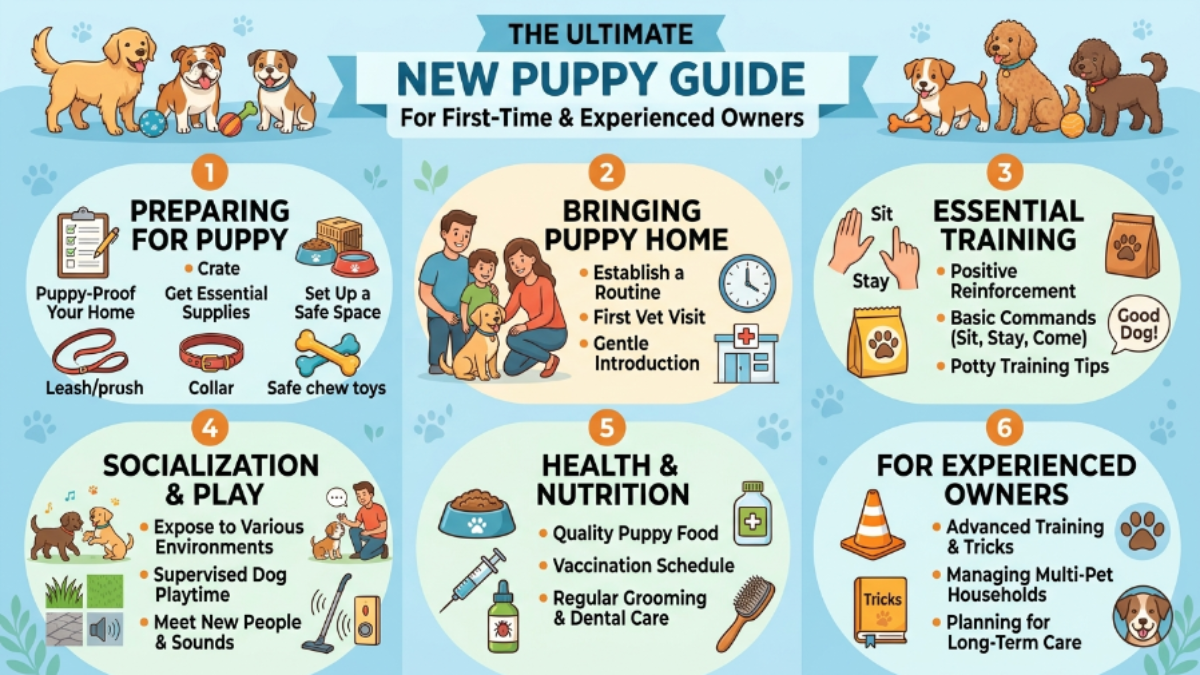
Welcoming a New Puppy Into Your Home
Bringing home a new puppy is an exciting and life-changing experience. Puppies bring joy, energy, and companionship, but they also require structured care, proper training, and consistent attention. The early stages of a puppy’s life are critical for shaping behavior, health, and overall development.
We provide a complete, practical guide to help you raise a healthy, well-behaved, and confident puppy from day one.
Preparing Your Home for a New Puppy
1. Puppy-Proof Your Space
Remove harmful items such as electrical cords, toxic plants, and small objects. Puppies are naturally curious and explore everything with their mouths.
2. Set Up a Dedicated Area
Create a safe space with a comfortable bed, food bowls, toys, and a crate. This helps your puppy feel secure and settle quickly.
3. Stock Essential Supplies
Ensure you have:
- High-quality puppy food
- Food and water bowls
- Collar and leash
- Chew toys
- Grooming tools
- Training pads
Feeding Your Puppy Properly
1. Choose High-Quality Puppy Food
Puppies need nutrient-rich food to support growth and development. Look for formulas specifically designed for puppies.
2. Follow a Feeding Schedule
Feed your puppy 3–4 times a day depending on age. Consistent timing helps with digestion and potty training.
3. Avoid Harmful Foods
Keep your puppy away from chocolate, onions, grapes, and processed human foods.
Puppy Training Basics
1. Start Training Early
Begin training as soon as your puppy arrives home. Early training builds good habits and prevents future problems.
2. Use Positive Reinforcement
Reward good behavior with treats, praise, or toys. This encourages learning and builds trust.
3. Teach Basic Commands
Focus on essential commands:
- Sit
- Stay
- Come
- Down
4. Keep Sessions Short
Puppies have short attention spans. Train in 5–10 minute sessions multiple times a day.
Potty Training Your Puppy
1. Establish a Routine
Take your puppy outside:
- After meals
- After waking up
- After playtime
2. Choose a Designated Spot
Use the same location each time to build consistency.
3. Reward Immediately
Praise and reward your puppy right after successful potty behavior.
4. Be Patient
Accidents are normal. Avoid punishment and focus on consistent training.
Socialization: Building a Confident Dog
1. Introduce New Experiences
Expose your puppy to different people, environments, and sounds gradually.
2. Encourage Positive Interactions
Ensure all experiences are safe and positive to prevent fear-based behavior.
3. Meet Other Dogs Carefully
Controlled introductions help develop healthy social skills.
Exercise and Play for Puppies
1. Daily Physical Activity
Puppies need regular exercise to burn energy and stay healthy.
2. Interactive Playtime
Use toys to engage your puppy mentally and physically.
3. Avoid Overexertion
Young puppies should not be over-exercised, as their bones are still developing.
Health and Veterinary Care
1. Vaccinations
Follow a proper vaccination schedule to protect against diseases.
2. Regular Vet Visits
Routine check-ups ensure your puppy stays healthy and grows properly.
3. Parasite Prevention
Protect your puppy from fleas, ticks, and worms with preventive treatments.
Grooming and Hygiene
1. Regular Brushing
Keep your puppy’s coat clean and free from tangles.
2. Bathing
Bathe your puppy only when necessary using gentle, dog-safe shampoo.
3. Nail Trimming
Trim nails regularly to prevent discomfort and injury.
4. Dental Care
Introduce tooth brushing early to maintain oral health.
Common Mistakes New Puppy Owners Should Avoid
1. Inconsistent Training
Mixed signals confuse puppies and slow learning.
2. Lack of Socialization
Poor exposure can lead to fear and aggression later in life.
3. Overfeeding
Too much food can lead to obesity and health issues.
4. Ignoring Behavior Early
Small issues can grow into serious problems if not addressed.
Creating a Routine for Your Puppy
Consistency is key to raising a well-behaved dog. Establish a daily routine that includes:
- Feeding times
- Walks and playtime
- Training sessions
- Rest periods
A structured routine helps your puppy feel secure and understand expectations.
Why Early Care and Training Matter
The first few months of a puppy’s life are crucial for shaping their behavior, personality, and health. Proper care ensures your puppy grows into a confident, obedient, and happy dog.
Conclusion: Building a Strong Foundation for Life
Raising a new puppy requires patience, dedication, and consistency. By focusing on proper nutrition, training, socialization, and healthcare, we create a strong foundation for a lifelong bond.
A well-raised puppy becomes a loyal companion, bringing joy and happiness to your home for years to come.
Add a Comment