
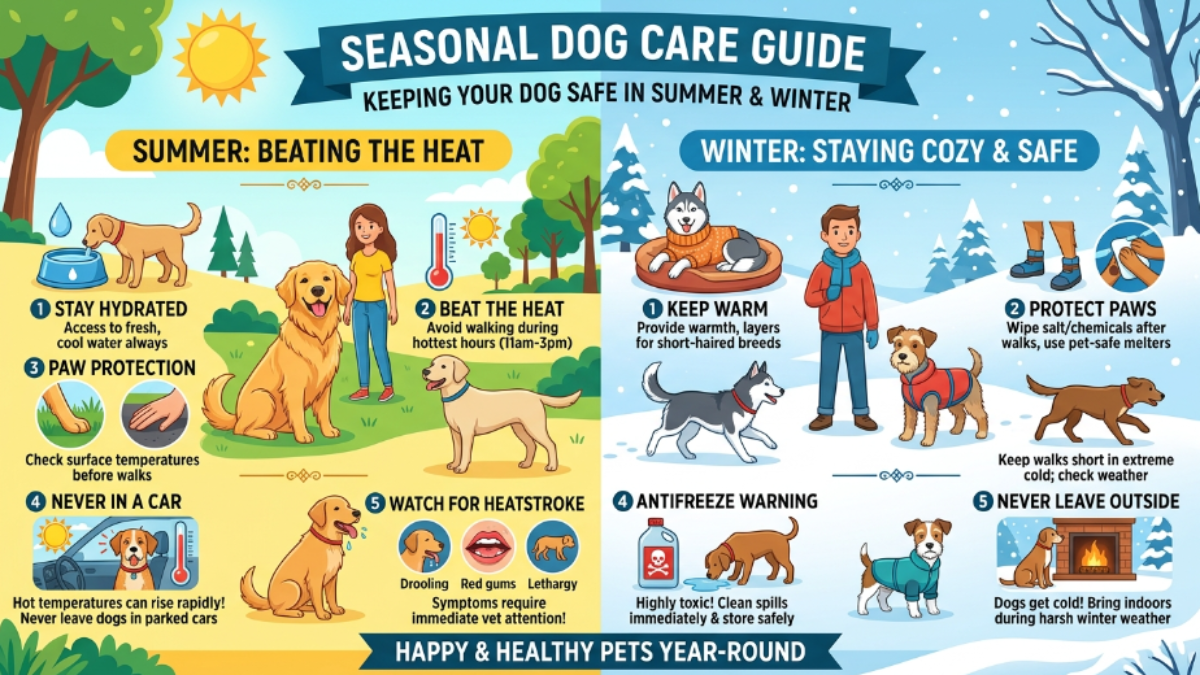
Caring for your dog changes with the seasons. From hot summer days to cold winter nights, your furry friend needs different types of care to stay healthy and comfortable. Understanding these seasonal needs can help prevent health issues and keep your dog happy all year.
Why Seasonal Care for Dogs is Important
Dogs are sensitive to temperature changes and cannot adjust as easily as humans. Seasonal care helps prevent:
- Heatstroke during summer
- Hypothermia during winter
- Dehydration and skin issues
- Paw injuries from hot or icy surfaces
Proper care ensures your dog stays safe and active in every season.
Summer Dog Care Tips
Hot weather can be dangerous, especially for dogs with thick coats or breathing issues.
Keep Your Dog Hydrated
Always provide fresh, cool water.
- Refill bowls regularly
- Add ice cubes if needed
- Carry water during walks
Avoid Walking in Extreme Heat
Hot pavements can burn your dog’s paws.
- Walk early morning or evening
- Check ground temperature before walking
- Choose grassy areas
Provide Shade and Cool Areas
Make sure your dog stays cool.
- Keep them indoors during peak heat
- Use fans or air conditioning
- Provide shaded outdoor spaces
Never Leave Dogs in Cars
Even a few minutes in a parked car can be life-threatening due to rising temperatures.
Watch for Heatstroke Signs
Look out for:
- Heavy panting
- Drooling
- Weakness
- Vomiting
If you notice these, cool your dog immediately and contact a vet.
Grooming in Summer
- Brush regularly to remove excess fur
- Avoid shaving completely, as fur protects from sunburn
Winter Dog Care Tips
Cold weather also requires extra attention to keep your dog safe.
Keep Your Dog Warm
- Use sweaters or jackets
- Provide warm bedding
- Limit exposure to cold weather
Protect Their Paws
Snow and ice can damage paws.
- Clean paws after walks
- Use paw balm
- Avoid salted surfaces
Maintain Proper Nutrition
Dogs may need more energy in winter.
- Provide balanced meals
- Ensure access to unfrozen water
Limit Outdoor Time
Keep outdoor activities short and supervised during extreme cold.
Watch for Hypothermia Signs
Symptoms include:
- Shivering
- Low energy
- Slow breathing
Seek veterinary help if needed.
Keep Them Active Indoors
- Play indoor games
- Use toys for stimulation
- Maintain a routine
Seasonal Grooming Tips
Summer
- Light brushing
- Regular baths
Winter
- Less frequent bathing
- Keep coat slightly longer
Seasonal Care Checklist
- Fresh water always available
- Comfortable sleeping area
- Regular vet visits
- Proper diet
- Weather-appropriate exercise
Final Thoughts
Seasonal care is essential for your dog health and comfort. By adjusting routines for summer and winter, you can protect your pet from extreme weather conditions and ensure they live a happy active life all year round.
Add a Comment