
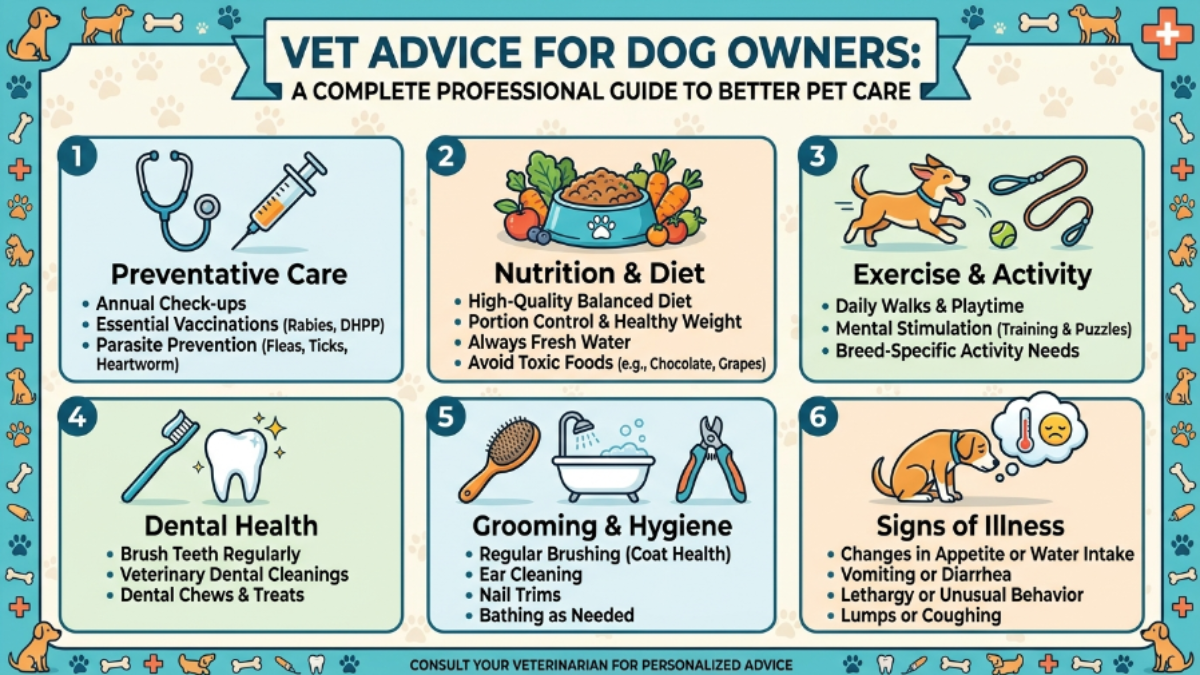
Getting proper vet advice is one of the most important parts of responsible dog ownership. A veterinarian is not just someone you visit when your dog is sick they are your long-term partner in keeping your dog healthy, active, and safe throughout their life.
Many dog health problems can be prevented or managed easily if detected early. That’s why regular veterinary guidance is essential, even when your dog looks perfectly healthy. Dogs cannot tell us when something is wrong, so it’s up to us to notice small changes and act quickly.
Think of a vet as your dog’s health coach. They guide you on nutrition, vaccination, behavior, and disease prevention so your dog can live a longer and happier life.
Why Vet Advice is Important
Veterinary advice is important because it helps you make the right decisions for your dog’s health. One of the biggest benefits is early disease detection. Many illnesses start with mild symptoms that are easy to miss. A vet can identify these early signs before they become serious.
It also ensures proper nutrition planning. Every dog has different dietary needs based on age, breed, and activity level. A vet can recommend the right food or diet plan to keep your dog in perfect condition.
Another major benefit is preventive care. Vaccinations, deworming, and regular checkups all help prevent serious diseases before they occur.
Most importantly, vet advice gives you peace of mind, knowing that your dog is receiving professional care.
When You Should Visit a Vet
Knowing when to visit a vet is just as important as the visit itself. You should take your dog to a vet if you notice any unusual behavior or physical changes.
Common signs that require veterinary attention include:
- Loss of appetite
- Vomiting or diarrhea
- Sudden weight loss or gain
- Excessive scratching or skin issues
- Difficulty breathing or coughing
- Lethargy or weakness
- Behavioral changes
Even if symptoms seem mild, it’s always better to be safe and get professional advice.
Routine Vet Checkups
Regular checkups are essential for maintaining long-term health. Most veterinarians recommend at least one checkup per year for adult dogs and more frequent visits for puppies and senior dogs.
During a routine checkup, a vet usually:
- Checks weight and body condition
- Examines teeth, ears, and eyes
- Reviews vaccination status
- Performs parasite control checks
- Evaluates overall health
These checkups help detect hidden problems before they become serious.
Common Vet Advice for Dog Health
1. Balanced Diet is Essential
Vets always recommend a balanced diet with proper nutrients. Poor diet is one of the leading causes of obesity, skin problems, and digestive issues in dogs.
2. Vaccination Should Never Be Missed
Vaccines protect against deadly diseases like rabies, parvovirus, and distemper. Following the correct vaccination schedule is critical.
3. Regular Exercise is Important
Dogs need physical activity to stay healthy. Lack of exercise can lead to obesity, anxiety, and behavioral problems.
4. Dental Care Matters
Many owners ignore dental hygiene, but vets strongly advise regular teeth cleaning to prevent gum disease and infections.
5. Parasite Control is Necessary
Fleas, ticks, and worms can cause serious health problems. Regular deworming and flea treatment are essential.
Vet Advice for Puppies
Puppies require extra care because their immune systems are still developing. Vets usually recommend:
- Starting vaccinations at 6–8 weeks
- Frequent feeding (3–4 meals per day)
- Early socialization with people and other dogs
- Regular deworming schedule
- Gentle training and routine building
Early care helps shape a healthy and well-behaved adult dog.
Vet Advice for Adult Dogs
For adult dogs, the focus shifts to maintenance and prevention.
Vets often advise:
- Balanced diet based on activity level
- Annual health checkups
- Regular exercise routines
- Weight management
- Booster vaccinations
Adult dogs may appear healthy, but internal issues can still develop without proper care.
Vet Advice for Senior Dogs
Senior dogs need special attention as they age.
Veterinarians recommend:
- Softer, easy-to-digest food
- Joint support supplements (if needed)
- More frequent health checkups
- Reduced but regular exercise
- Monitoring for chronic diseases like arthritis or diabetes
Older dogs benefit greatly from early detection and supportive care.
Common Mistakes Dog Owners Make
Many health problems happen due to simple mistakes:
- Ignoring early symptoms
- Skipping vaccinations
- Feeding human food regularly
- Overfeeding treats
- Not visiting the vet until the condition becomes serious
Avoiding these mistakes can significantly improve your dog’s health and lifespan.
How to Follow Vet Advice Properly
Following vet advice requires consistency. Always complete prescribed treatments, even if your dog starts feeling better.
Keep a record of vaccinations, medications, and health checkups. This helps your vet understand your dog’s history better.
Ask questions whenever you are unsure. Good communication with your vet leads to better care for your dog.
Conclusion
Vet advice plays a vital role in keeping your dog healthy, safe, and happy. Regular checkups, proper nutrition, vaccinations, and preventive care can protect your dog from many serious health problems.
A veterinarian is your best partner in ensuring your dog lives a long and comfortable life. By following professional guidance and staying alert to changes in your dog’s behavior, you can provide the best possible care.
FAQs
1. How often should I take my dog to the vet?
At least once a year for healthy adult dogs, and more frequently for puppies and senior dogs.
2. What is the most important vet advice for dogs?
Regular vaccinations, balanced diet, and routine checkups are the most important.
3. Can I treat my dog at home without a vet?
Minor issues may be managed at home, but serious symptoms always require veterinary care.
4. Why is preventive vet care important?
It helps detect diseases early and prevents serious health problems.
5. Do healthy dogs still need vet visits?
Yes, because many diseases develop silently without visible symptoms.
Add a Comment